The sales world is dynamic and continuously evolving - technology, trends, and tactics are never static.
Today, successful salespeople have learned that the key to guaranteed success is to master sales pipelines. It has also been found that you need more opportunities in your pipeline to attain your monthly revenue goals. According to a specific survey by HubSpot, 72% of companies with fewer opportunities did not reach their targets.
When sales leaders have a good sales pipeline based on a well-thought sales pipeline template, the business won't depend on accidental wins. The pipeline will provide valuable insights into all opportunities, bottlenecks, and resource allocation.
In this guide, we will look at the sales pipeline and how to utilise it effectively to increase your revenue.
What is a sales pipeline?
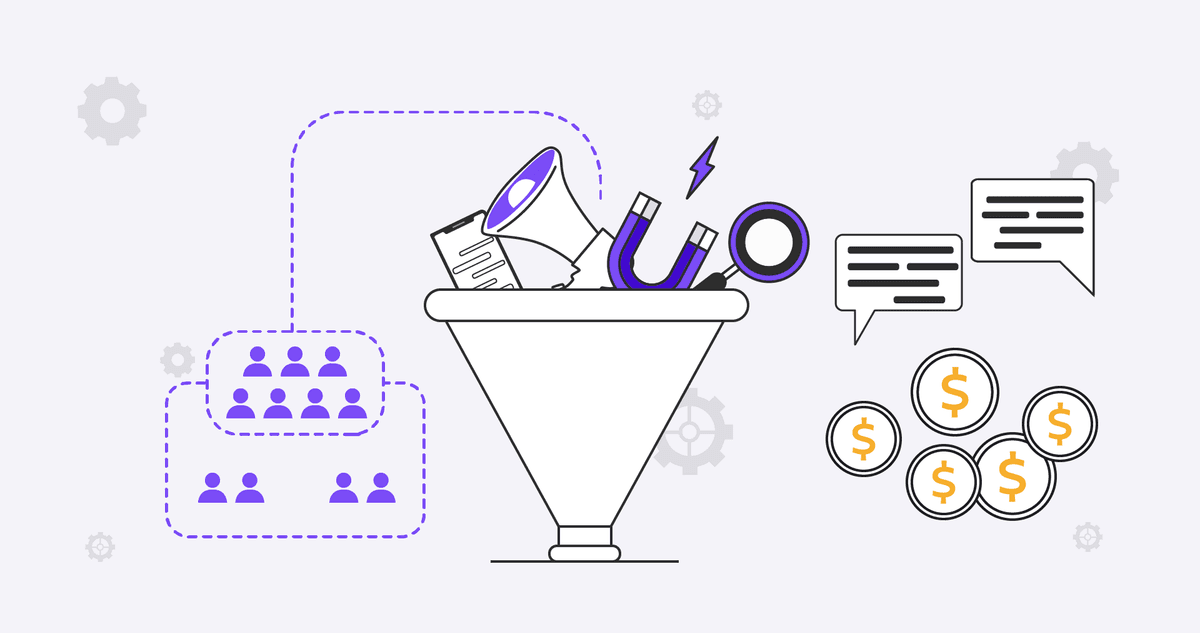
A sales pipeline is a visual way of seeing all your sales opportunities. It reveals prospective buyers as they move through the different stages of the buyer journey and the activities involved in each stage.
Such a sales pipeline makes it easy for you to track the people who have expressed interest in your product or service, and their progress through the sales process. Ultimately, it lets you know if you successfully convert them into customers.
How do sales pipelines work?
A sales pipeline is often confused with a sales funnel. While the two are related, there are differences in how they work.
A sales pipeline displays where your prospects are in the sales process. A sales funnel on the other hand reveals the conversion rate as people go through the sales process. It indicates how many prospects enter or exit each stage.
In a CRM, a sales pipeline is often visualised as Kanban boards to give the sales team a quick overview of what deals are coming up. In a typical sales pipeline, you can see which sales reps are working on which opportunities, who the prospects are, how much time has to be spent on them, and how likely it is that they will become customers.
At the top of each sales pipeline stage, you can see how much revenue your sales pipeline is expected to generate based on the value of the opportunities in that stage.
What you'll need before you start building your pipeline
While it is true that you can adopt a sales pipeline template for your organisation, the best is a sales pipeline that is custom-designed for your operations, with the template as a starting point for structure and reference.
Here is what you will need to start building your own sales pipeline.
A list of prospective buyers
The first thing you need to build a sales pipeline is a list of potential customers. Your sales pipeline buyer list should include names, contact information, whether or not they are a decision maker at work, and their pain points and challenges.
Your sales process
Once you have a list of prospects, it's time to determine how to best market your products and services. This includes how often you will contact your customers, what kind of lead generation tools will be used, and who will be involved in the process from start to finish.
Your sales target
Remember that any sales pipeline is supposed to help you meet your sales goals. You should therefore define these goals/targets ahead of time. Your sales/revenue target will help you determine the number of deals you need to add to your pipeline to achieve your target.
Team members buy-in
As a sales leader, for your sales pipeline to be effective, everyone on your team has to be carried along in its creation process. So whether you are looking to use a spreadsheet-based sales pipeline template or invest in a CRM, ask your sales reps for opinions. These are the people that will use this tool.
What are the stages of your sales pipeline?
Sales pipelines differ by organisation and offerings. However, a typical sales pipeline includes the following seven stages:
1. Prospecting / Lead generation
This sales pipeline stage is where you cultivate the interest of potential customers. An important first step in this stage is creating your buyer persona. You can then try to reach people that fit that profile using paid and non-paid campaigns.
2. Lead qualification
This is all about ensuring you are working with the right person to make a sale. This sales pipeline stage involves researching the prospect's willingness, authority, and financial ability to buy from you.
3. Contact
Initiating contact with a prospect is when you get in touch with them for the first time. At this stage, your sales pipeline has started to narrow as you have filtered out leads that are not going anywhere.
4. Schedule demo
This sales pipeline stage can be as simple as taking someone out for coffee, where they get to see how your product works in real-life situations, or it can be as complex as having them attend an entire instructional workshop.
5. Negotiation
The next sales pipeline stage is the negotiation stage. This is where you'll come up with acceptable terms and conditions to both parties and submit your proposal.
6. Closing the sale
You're all agreed on terms when you arrive at this sales pipeline stage. This is where you close the deal!
7. Post-purchase
The post-purchase sales pipeline stage means ensuring that you deliver a customer experience that results in repeat business. This is very important because it costs 5 times more to get a new customer than to keep an existing one.
"By 2022 over 70% of B2B marketers are going to be using intent data as part of their marketing strategy" - Gartner Digital Markets
How to create a pipeline for your organisation
It is not enough to know all the different sales pipeline definitions and stages, you should also know how to use one to manage and boost sales potential. Here's how to create it for your business:
Organise your potential buyers
Whether you are looking at using a sales pipeline template or want a customised solution, the first step in creating a sales pipeline is to organise your list of potential buyers. This will help you identify who they are, where they are from, and what they want.
For the most part, you can organise your list using a regular spreadsheet. You can also use a sales pipeline template. However, a CRM is best if you want a more efficient system.
Establish your sales pipeline stages
Once you have identified who might buy what, it's time to figure out where they are in their buying journey. This will be different for every company, but the seven stages discussed above are what most companies go through.
To ensure that the sales pipeline stages you define are relevant to your sales process, think about the activities your team engages in when selling and identify the ones you think are the most effective.
Refine your stages as you go along
Once you have activated your sales pipeline, you may find that you need to tweak certain aspects. For example, you may find that some sales pipeline stages are not needed for certain clients and others are quite important. As you refine, you will eventually determine the best process for your business.
Update your pipeline
Now that you have built your sales pipeline and got it all figured out, you must keep it up to date. This means that your sales team must move deals from one sales pipeline stage to the next once an activity has been completed.
Your sales pipeline template can tell you what happens at every point of your sales process.
How to measure the quality of a sales pipeline
The quality of your sales pipeline can be evaluated in various ways:
- Sales pipeline velocity - A high sales velocity, a short sales cycle length, and a high conversion rate mean that your sales pipeline is performing well.
- Lead quality - You can also evaluate lead quality by keeping track of how many leads you've qualified or not qualified. You want to make sure that your pipeline is full of qualified leads.
- Win rate - This is the percentage of leads that convert into sales. If you notice a low win rate at any stage in your sales pipeline, then you need to find out why.
Other metrics you can use to evaluate your sales pipeline include:
- Average deal size
- Conversion rate per sales pipeline stage
- Customer acquisition cost
- Customer lifetime value
- MQL to SQL conversion rate
- Number of qualified leads per week
What you'll need to build and maintain a pipeline
To design and maintain a sales pipeline for your organisation, you'll need tools that can allow you to capture and nurture leads until they become customers. For really small operations, Microsoft Excel, any other spreadsheet app, or any sales pipeline template can work, but as your operations grow, you'll have to upgrade to a sales pipeline CRM like Pipedrive.
Pipedrive can be customised to map sales processes, add new pipelines for different sales projects, and manage multiple sales teams and projects.
It is very easy to use, allows sales leaders and reps to focus on the activities that matter, and delivers measurable results.
Benefits of sales pipeline automation with Pipedrive CRM and Automaly experts
Everyone is looking for ways to increase sales, and sales automation is an excellent way. Fortunately, this is now easier than ever before, thanks to Automaly.
Our sales pipeline automation makes it easy to maintain track of important touchpoints and better understand your Pipedrive sales pipeline.
At Automaly, we deliver:
- Pipedrive workflow automation customised for your sales team alone
- Expert tips and consultancy to help you make the best of your Pipedrive CRM
- A custom approach to sales automation
Automaly Automation and AI experts take the guesswork out of your selling. We also save you time and money.
Want to see how it works? Schedule a free consultation today.
Final Thoughts
If you're looking to optimise your company's sales, you need to consider setting up a sales pipeline.
Sticky notes, spreadsheets, and even a sales pipeline template are viable options, but sales pipeline automation with Pipedrive CRM and Automaly experts is recommended for the best possible outcomes.
Ready to Explore AI & Automation?
The AI Readiness Assessment identifies exactly where automation will deliver the greatest return for your organisation.